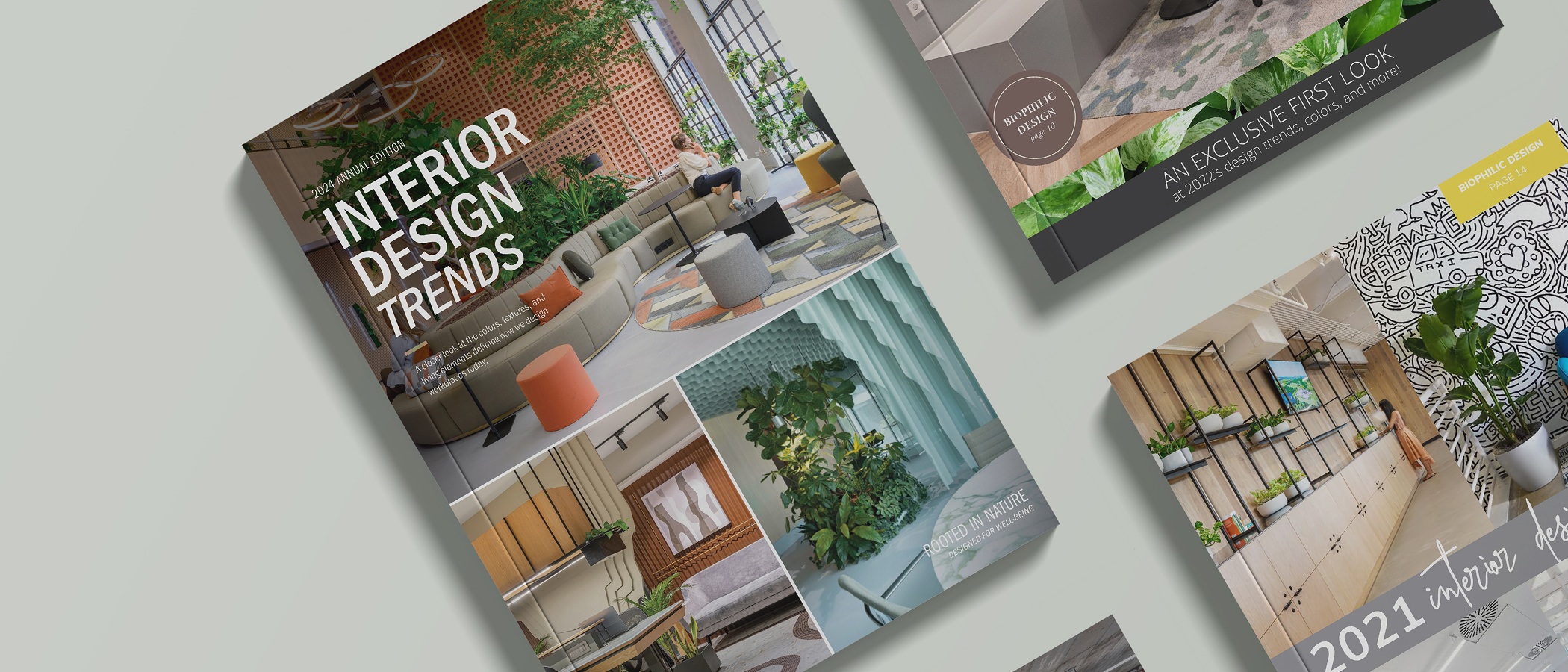
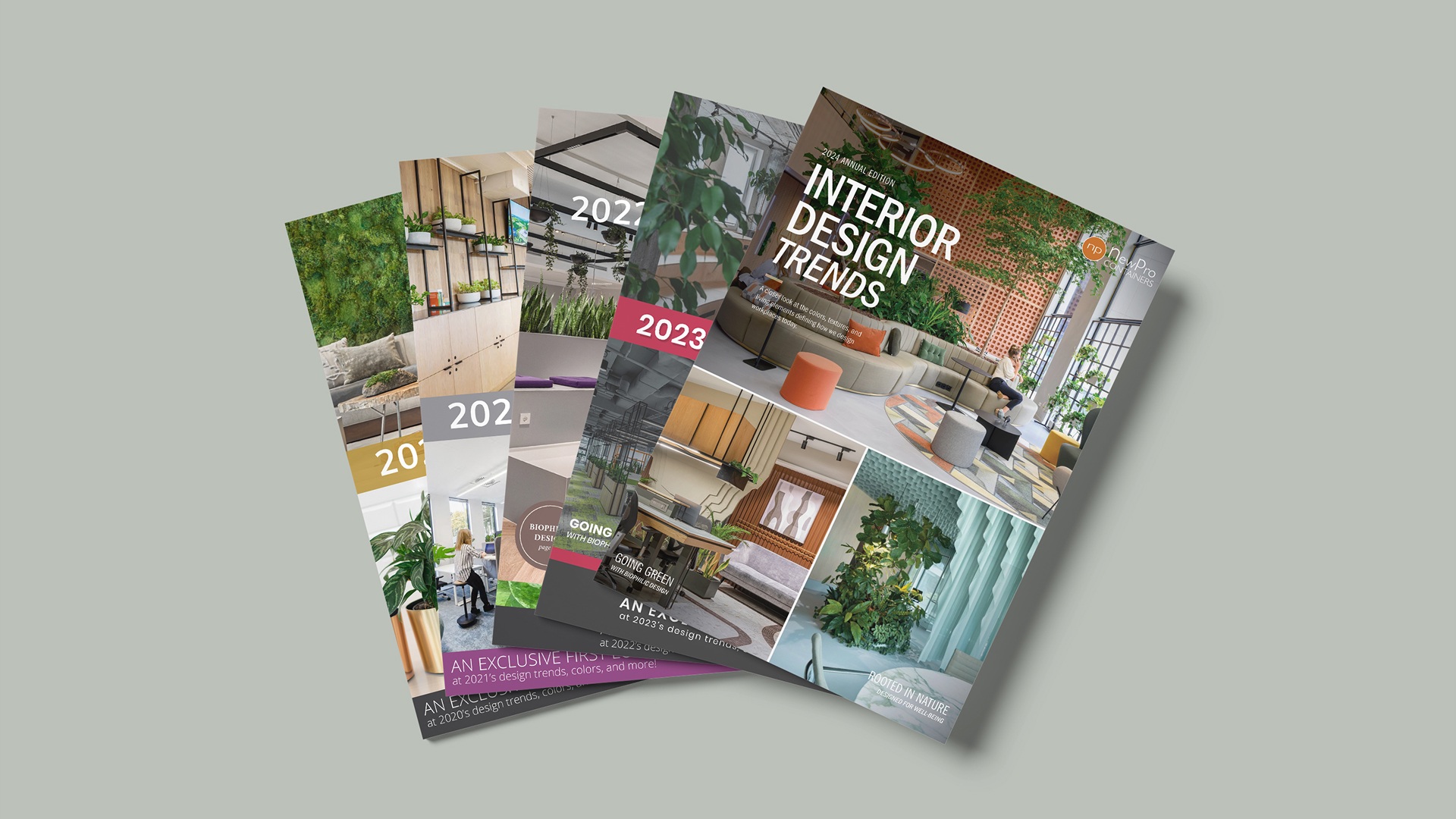
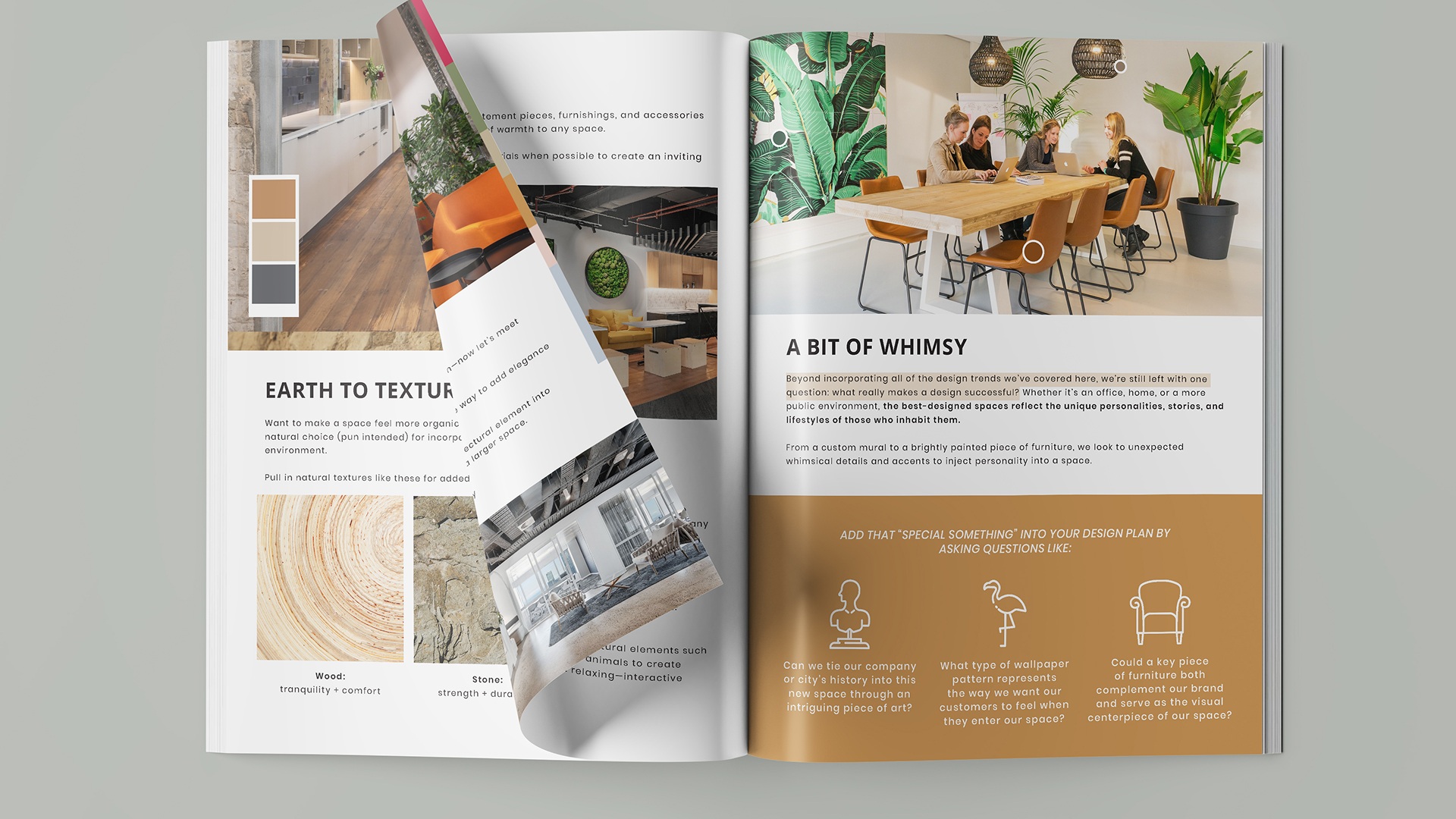
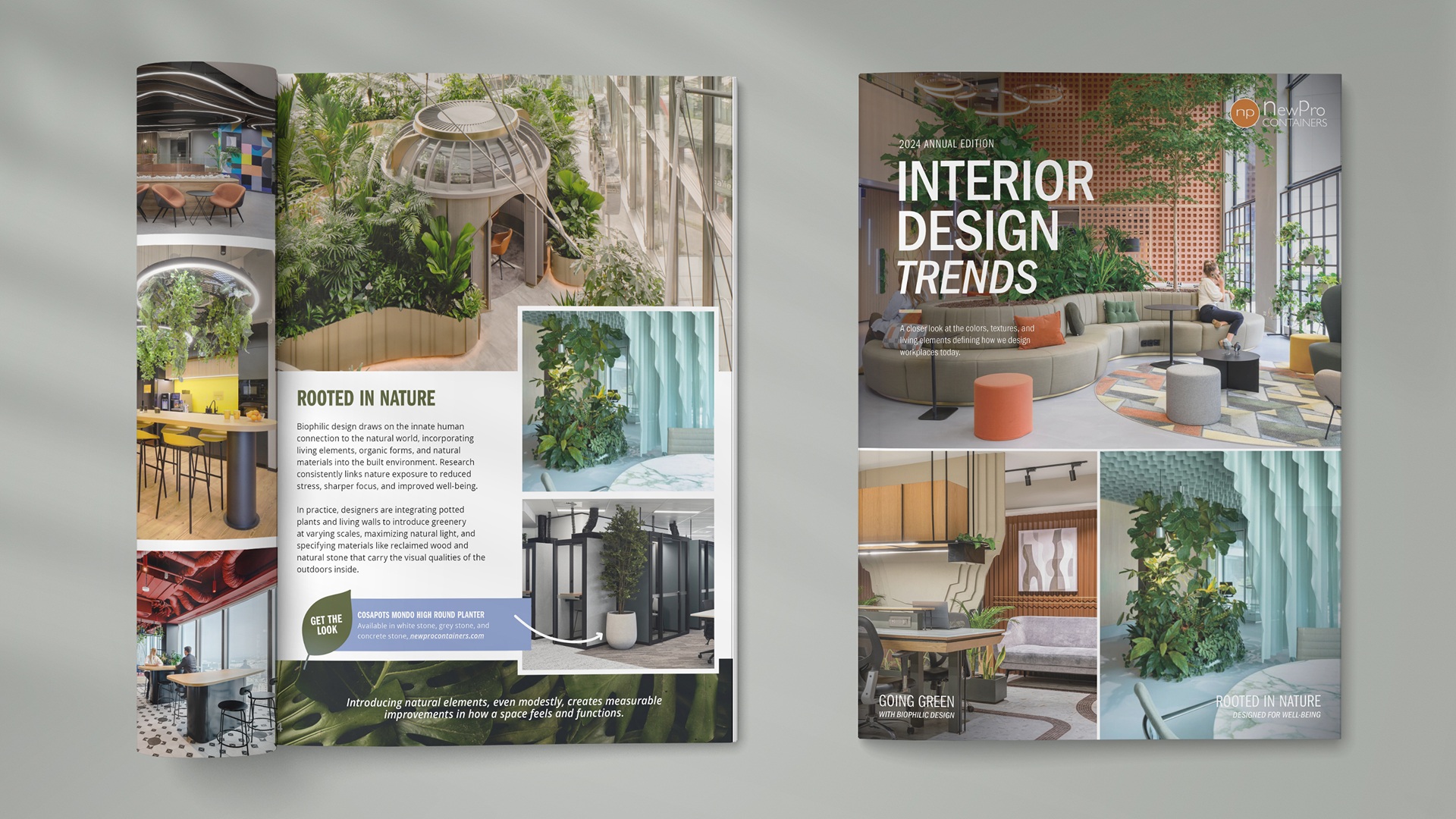
The audience for this guide, commercial buyers and plant professionals, are knowledgeable and visually literate. Generic design content wouldn’t hold their attention. The work had to feel credible and specific enough to be useful, while still being accessible to a range of buyers across different project types.
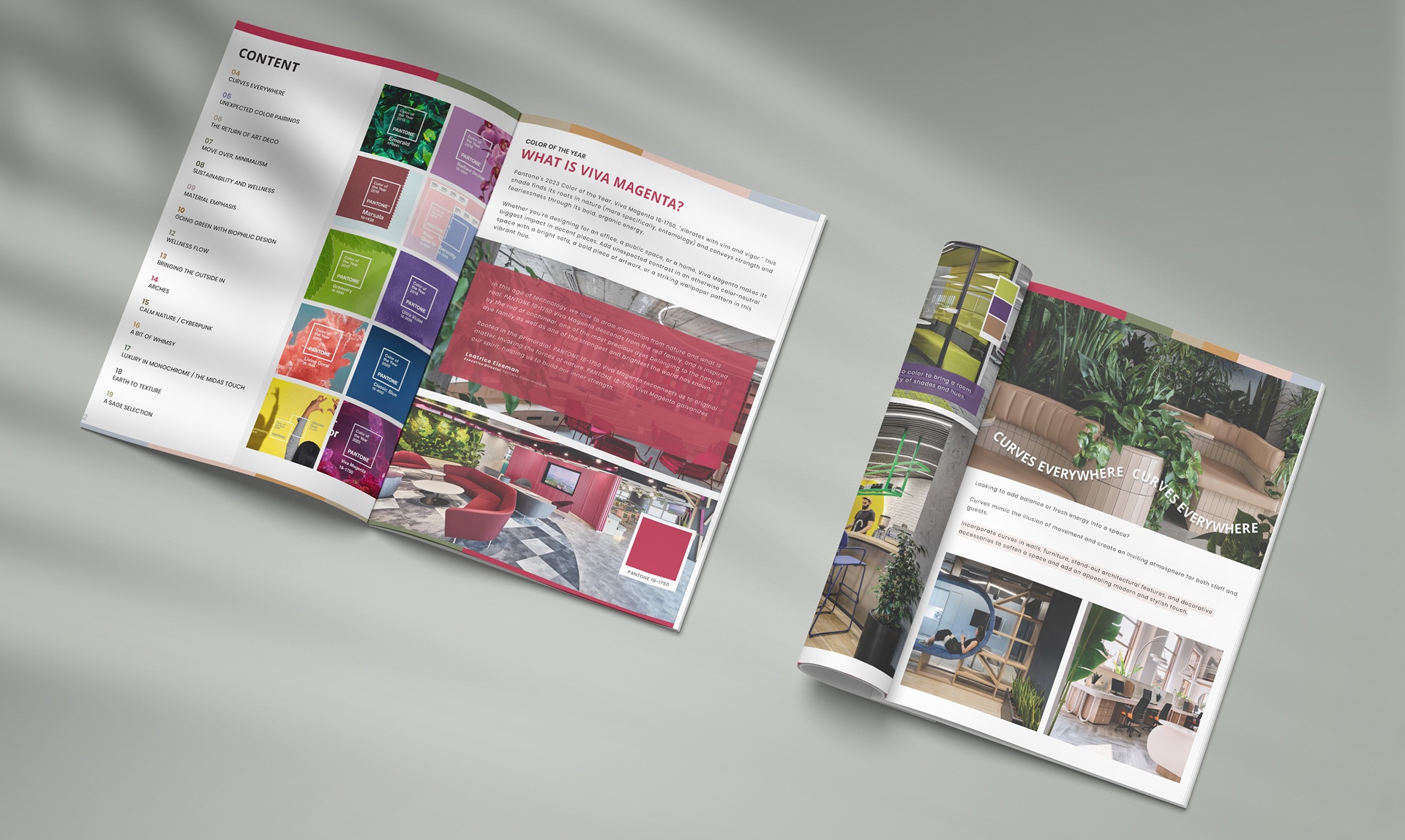
Because this was a side project with creative freedom, the process was largely self-directed. Research meant staying close to what was actually happening in commercial interiors: tracking trade publications, sourcing photography from real office and hospitality environments, and identifying which trends had enough traction to be worth covering. The goal wasn’t to predict trends but to synthesize them in a way that helped the audience see their own projects more clearly.
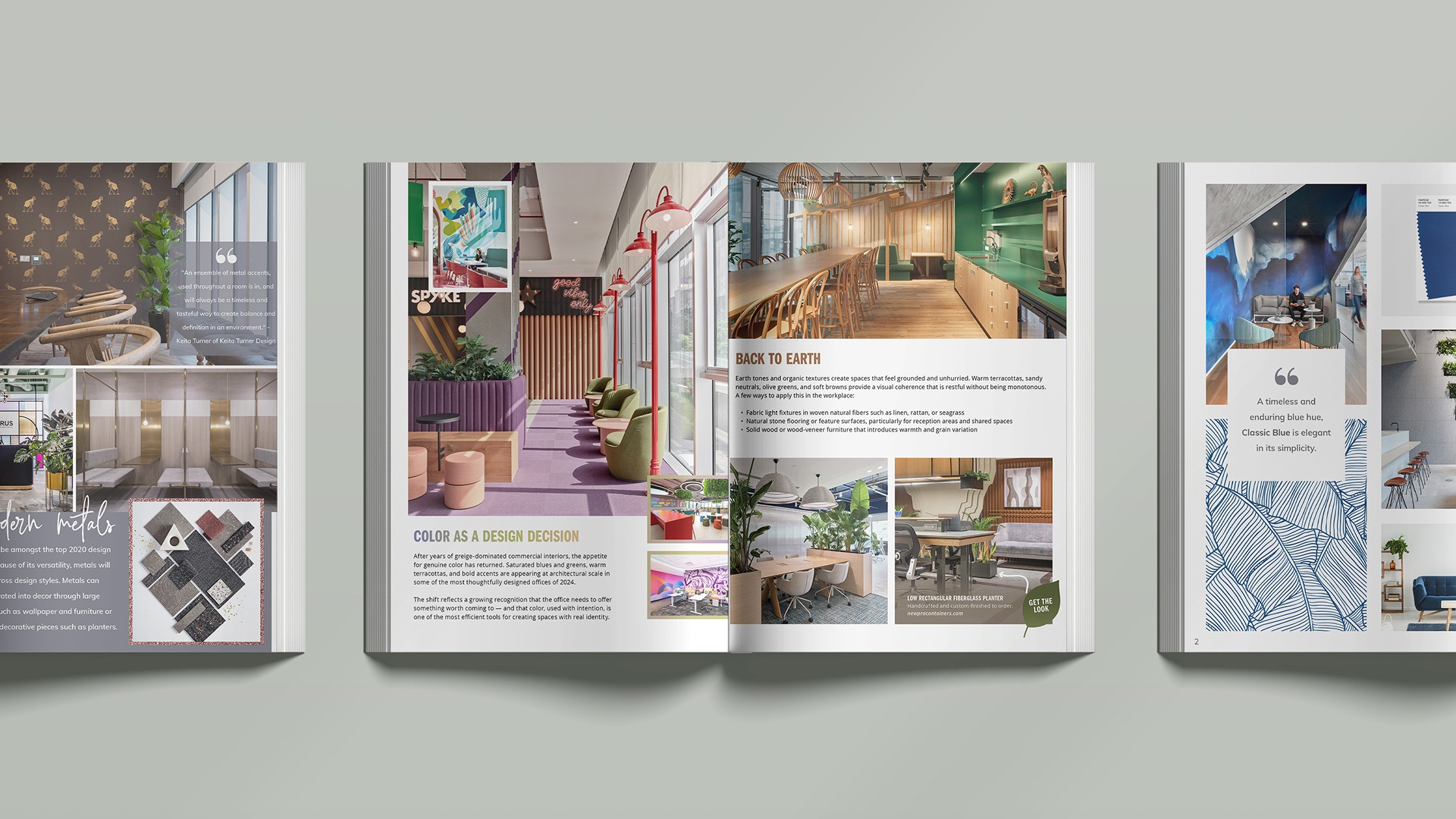
One consistent challenge was writing copy that served both the design content and the product without making that connection feel forced. The balance came from leading with the trend and letting the relevance of planters and biophilic design follow naturally. When the marketing team brought edits or directional input, that feedback was a welcome part of the process. It kept the content aligned with broader brand goals and often pushed the writing to be clearer and more focused.
Sourcing imagery was a significant part of the research process. Every photo was selected to reflect real, well-executed commercial spaces rather than idealized renders, which kept the guide grounded and gave the audience something they could reference.