Back to projects
Art Direction, 3D

3D Product Rendering Library: Fiberglass Planter Collection

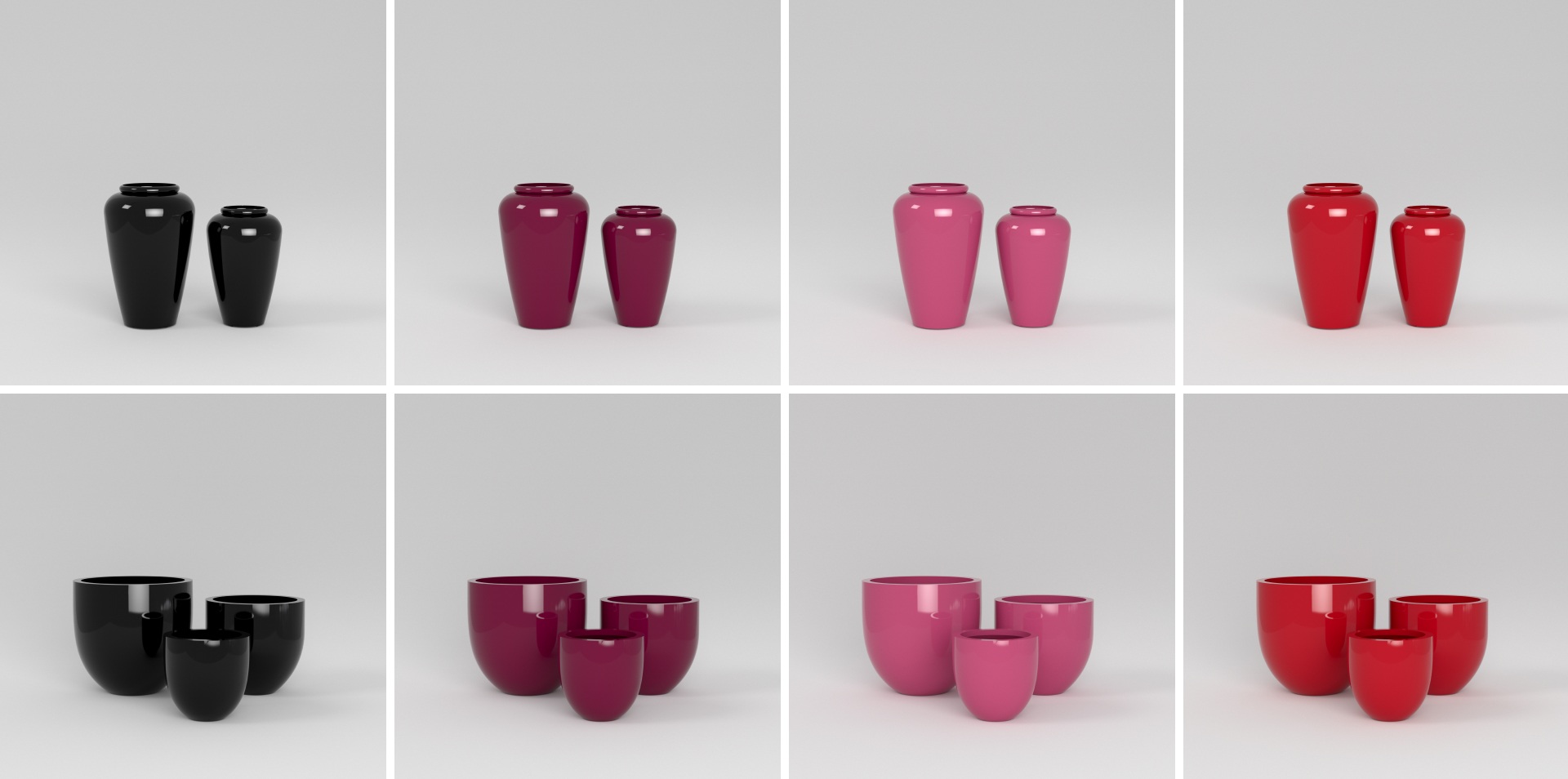
The company had 3D files for its fiberglass planter line, but none that were workable for rendering. Starting from raw manufacturer STL files with no UV maps, I processed, corrected, and in some cases fully rebuilt 81 planter styles across multiple sizes, then rendered each in 21 finishes. The library totaled 400 products rendered in 21 colors each, becoming the primary source of product imagery across the website and a complete visual resource across every channel.

Role 3D Artist & Art Director
Timeline 2019 to 2024, ongoing alongside other responsibilities
Deliverables Art Direction, 3D

The Context & Why

The fiberglass planter line came in 81 styles, multiple sizes per style, and 21 standard finishes plus custom colors. Photographing every combination wasn’t realistic. The cost, time, and logistics of shooting hundreds of large planters across that many finishes made photography an incomplete solution from the start.

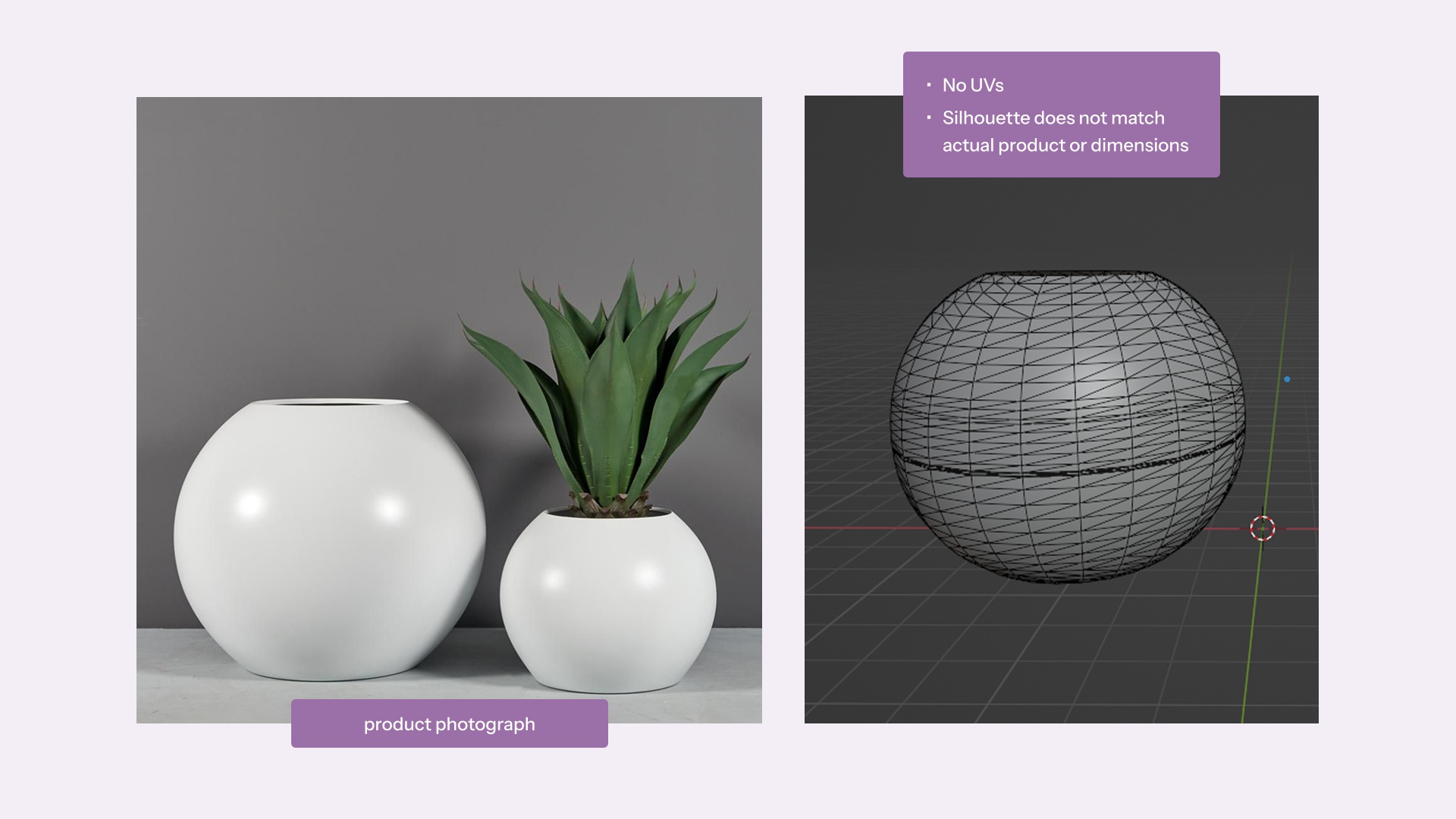
The manufacturer provided 3D files, but they were raw STL exports with no UV maps and in many cases geometry that couldn’t hold materials accurately. There was no existing pipeline for turning those files into usable renders. Without a workable 3D asset library, the team had no reliable way to represent the full product range visually.

The project started in 2019 as a side effort alongside other responsibilities. As the business need grew and the gaps in product imagery became more apparent, it became a more defined priority.
Challenges & Approach

The starting point for every planter was a raw STL file from the manufacturer. STL files carry no UV data, so the first task for each model was converting to FBX, marking seams, and building UV maps from scratch. Scaling the UVs consistently across styles was a particular challenge: a planter 10 inches wide and one 72 inches wide needed materials that looked the same in real-world scale, which required establishing a base UV scale and applying it uniformly across the entire library.

Some models had geometry problems that couldn’t be fixed through UV work alone. Those required partial or complete mesh rebuilds, using product photography and physical samples as reference. Depending on the complexity of the shape, a rebuild could take anywhere from 30 minutes to three hours. Mesh correction was eventually handed off to an external resource once the process was about 80 percent complete. I managed that relationship and handled all material application and rendering once files came back.

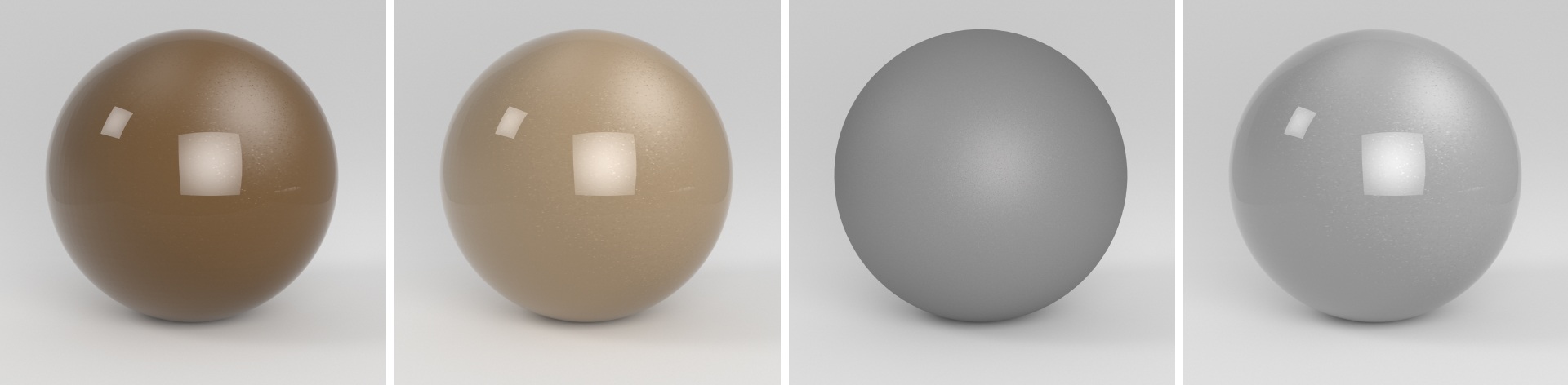
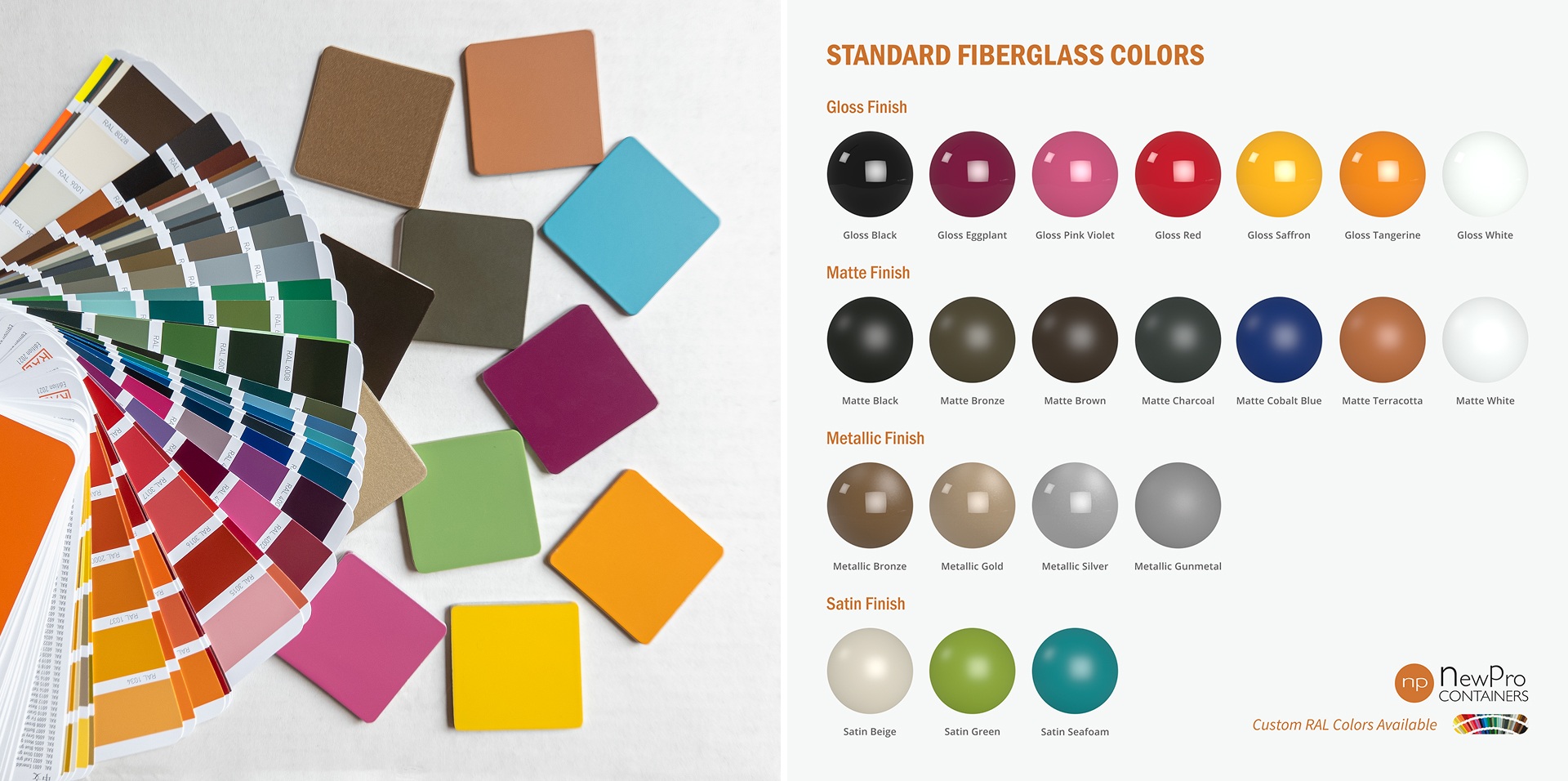
Material creation preceded much of the mesh work. Each of the 21 finishes was built to accurately represent the real product using a Nix device to capture exact hex codes from physical samples, with surface normals constructed through photography and procedural textures. Finishes with metallic flakes required building the flake structure itself to replicate how the finish behaved under light. The more complex finishes, particularly metallics and gloss colorways, only became clear from handling physical samples and observing them closely.

As the library grew, earlier renders were occasionally revisited. Improved understanding of materials and lighting meant some of the first renders needed updating to stay consistent with later work.

Design Process

Each model followed the same pipeline. STL from the manufacturer, converted to FBX, seams marked, UV maps built to a consistent real-world scale, materials applied, then rendered in Cinema 4D with Redshift. The consistency of that process was what made it possible to work across 81 styles and hundreds of size and color combinations without the library feeling uneven.

The visual direction was intentionally restrained. These were catalog and website images, not campaign work. Studio lighting was set once and built to work across every finish type, from matte to gloss to metallic. Background, shadow, and light position were kept consistent so that images could sit alongside each other on a product page or in a catalog without standing out. With 400 products across 21 colors, any variation would have been visible.

Renders were produced at resolutions appropriate for both print and web from the start. Some sizes were skipped in the initial pass and returned to later as gaps became apparent. New styles and finishes were added as the business needed them through to 2024.

Final Design

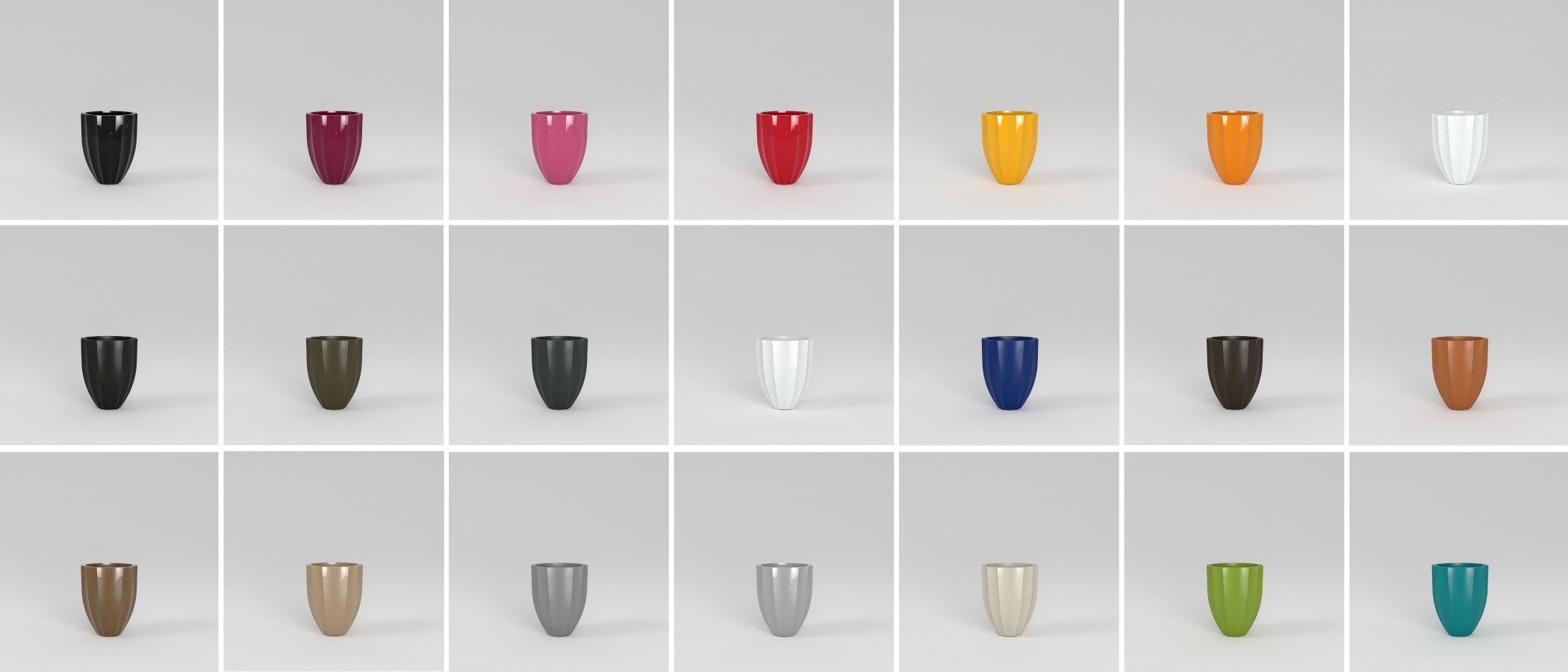
The completed library covered 400 products rendered across 21 colors each, representing 81 planter styles in multiple sizes. Every render was produced at resolutions suitable for both print and web, giving the team a single library that could serve the catalog, website, and campaign work without reshooting or rescaling.

The library was substantially complete by 2024, with gaps filled in and new styles added throughout.

Outcome & Impact

Before the library existed, the team was limited to whatever could be photographed. The 3D library filled that gap, making every style in every finish available as a production-ready image.

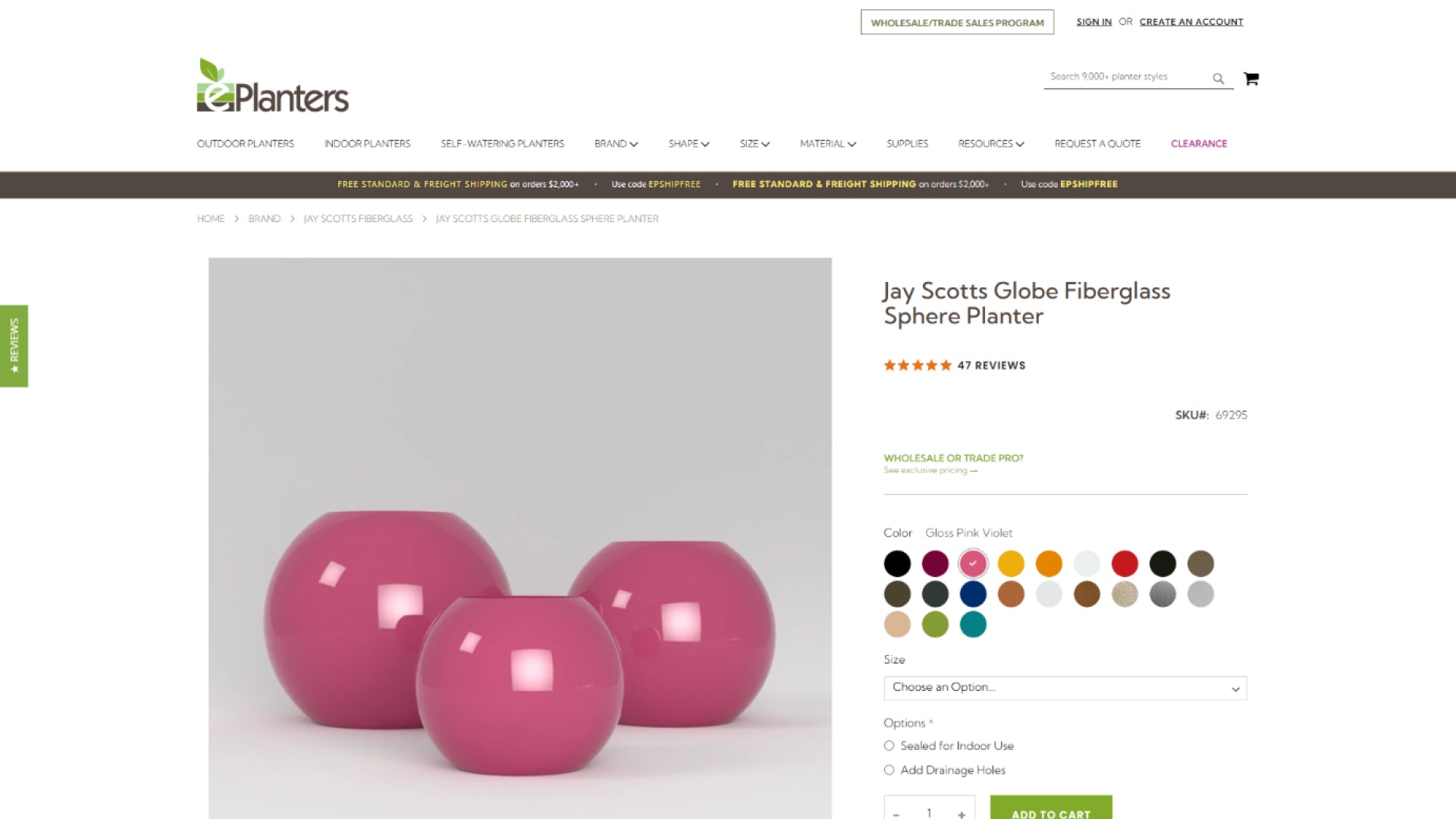
The website was the most direct beneficiary. For a product line where finish and color are primary purchase drivers, having the full range accurately represented across all 21 colors made a practical difference for customers making purchasing decisions online.

The library also became the foundation for the environmental lifestyle work here. Without the product render library in place, the environmental lifestyle work wouldn’t have been feasible.

Reflections

A project this size, running alongside other responsibilities over several years, required a different approach than most creative work. There was no deadline driving it and no single moment of completion. Progress was measured in models corrected, materials finished, and renders delivered rather than in milestones or presentations.

The technical learning curve was steep at the start. Working through UV mapping, real-world material construction, and render lighting without a dedicated pipeline or team to reference meant figuring out most of it independently. That process was slow early on and faster as the work accumulated.

A library of that scale only works if every image can sit next to every other image without standing out. Establishing the studio setup, UV scale, and material approach early meant those decisions didn’t need to be revisited every time a new style was added.

One of the more significant workflow improvements came from developing a material switching process in Cinema 4D. Rather than manually swapping materials and re-rendering 21 times per product, I built a setup that cycled through all 21 finishes frame by frame in a single render pass. One click started the render, and each color came out as its own frame automatically.

Deliverables

01

3D Product Render Library: Approximately 8,400 individual renders covering 400 products across 21 colors each, spanning 81 planter styles in multiple sizes, produced at resolutions suitable for both print and web.

02

Processed 3D Models: 81 planter styles converted from manufacturer STL files, with UV maps built to a consistent real-world scale and meshes corrected or rebuilt as needed.

03

Material Library: 21 real-world finish materials built in Cinema 4D, with select materials created in Substance Painter and refined in Substance Sampler. Each finish was constructed from physical samples using Nix device color capture, covering matte, gloss, textured, and metallic colorways.

04

Render Pipeline: A standardized studio setup and material switching system in Cinema 4D that automated the 21-color render pass, enabling the full color range to be produced from a single render operation.

Up Next

Environmental 3D Rendering: Lifestyle Imagery & Campaign Assets